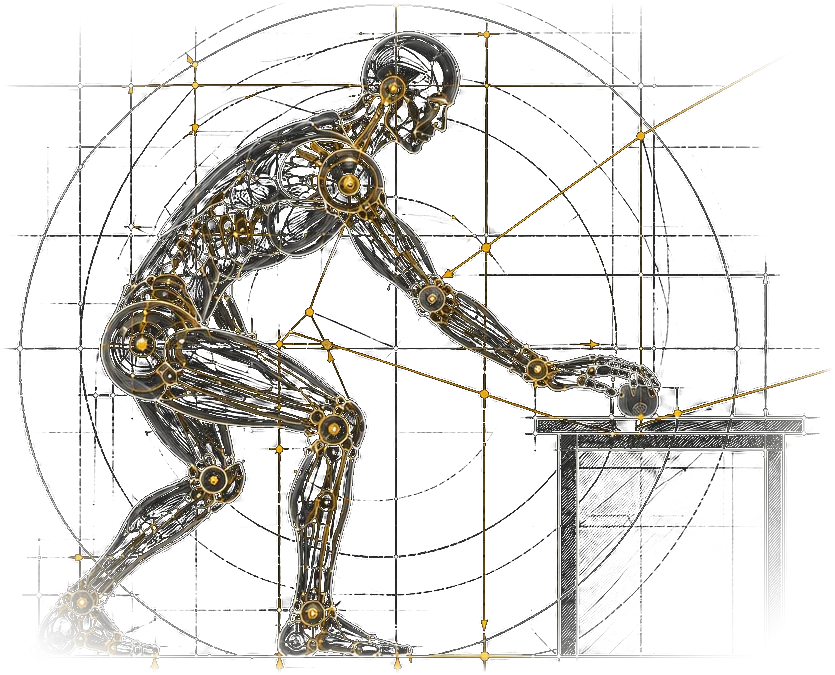
We record the full kinetic chain of human movement, with the muscle activation that drives it and the forces a camera can't see, and turn it into training data humanoids can learn from.
kinetic chainn. The body moving as one linked system. A reach starts in the feet and travels through the legs, hips, trunk and shoulder to the fingertips. We record all of it, together.
Plate I · The gap
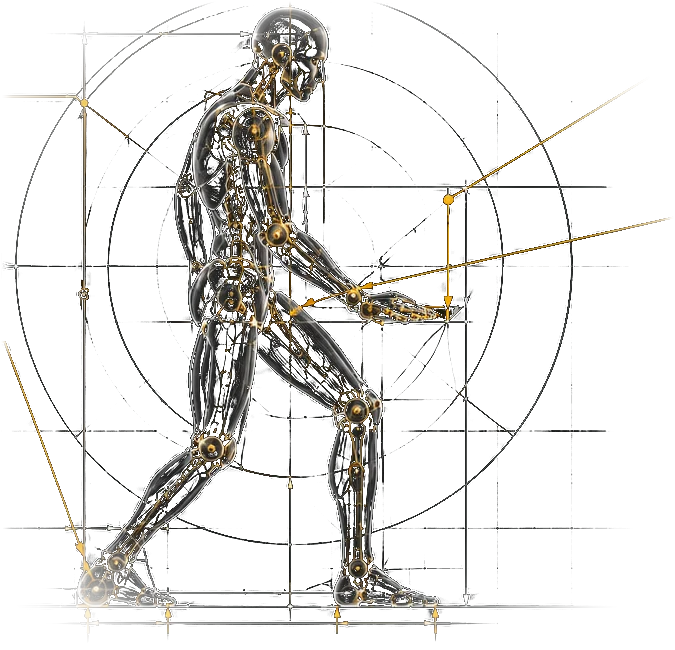
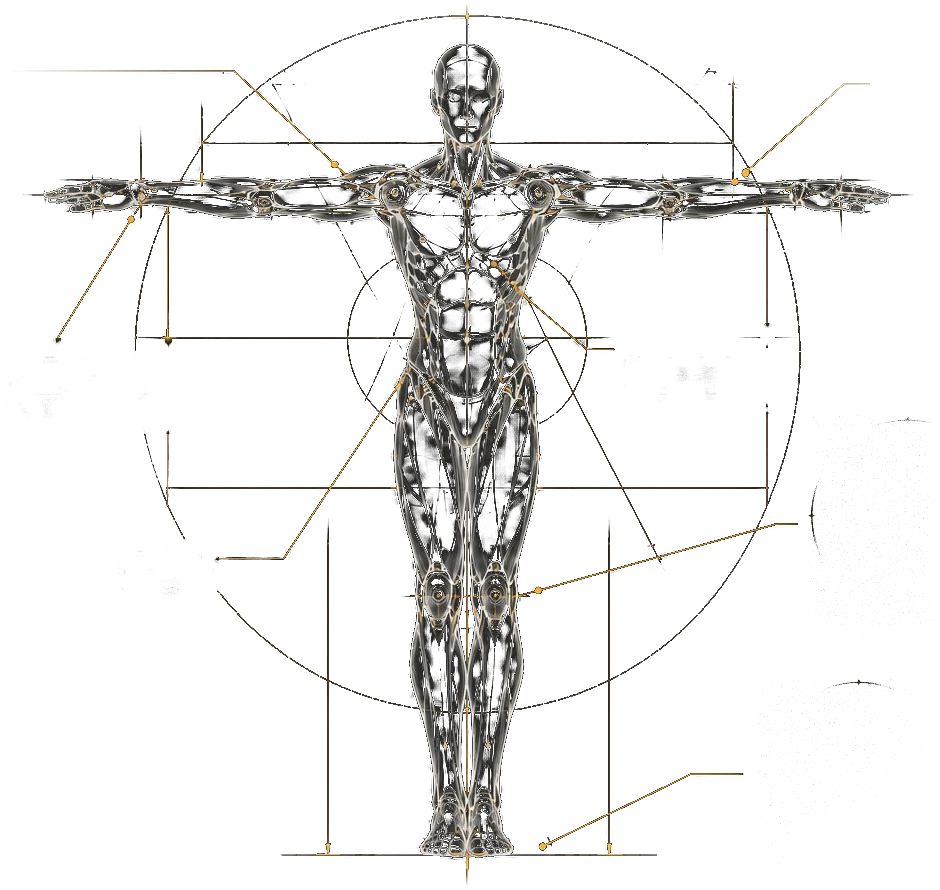
A camera sees the movement. The forces stay hidden.
Much of today's robot training data comes from teleoperation: jittery, and blind to force. Video and motion capture add more of the movement, and still miss the forces behind it.
So the robot guesses how firmly to grip, when a load starts to slip and how hard the feet push to keep it upright. That's where grips crush, objects drop and balance fails.
Move across the figure to reveal the forces
Load in the handsForce at each contact, with the object's mass.
Trunk and pelvisThe weight shifts to carry the load.
BalanceCentre of mass kept over the feet.
Ground reactionThe feet push back against the floor.
Plate II · Why now
Humanoids are leaving the lab. Contact is the hard part.
Learning
Robots learn from people.
Human demonstrations are now one of the main ways humanoids pick up physical skills. What goes into a demonstration shapes what the robot can do.
Supply
Motion is getting easy to collect.
Cameras and motion capture are everywhere. The forces behind a movement take purpose-built capture and careful calibration.
Failure
Force is where robots fail.
Gripping too hard, letting a load slip, tipping under weight. The moments that go wrong are the ones most worth learning from.
Plate III · What we record
One interaction, captured whole.
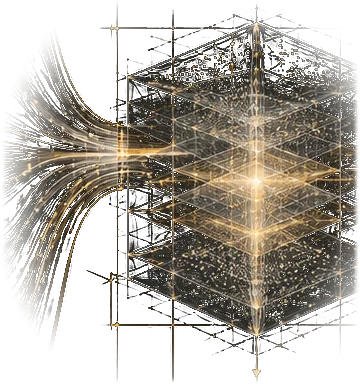
We record the full kinetic chain of human movement and keep what video misses: the forces at every contact and the muscle activation behind each motion. Everything runs on one clock, each channel mapped to the matching joint of a humanoid, then packaged as episodes a robot-learning team can train on.
Plate IV · Fingertip to floor
The whole kinetic chain, on one clock.
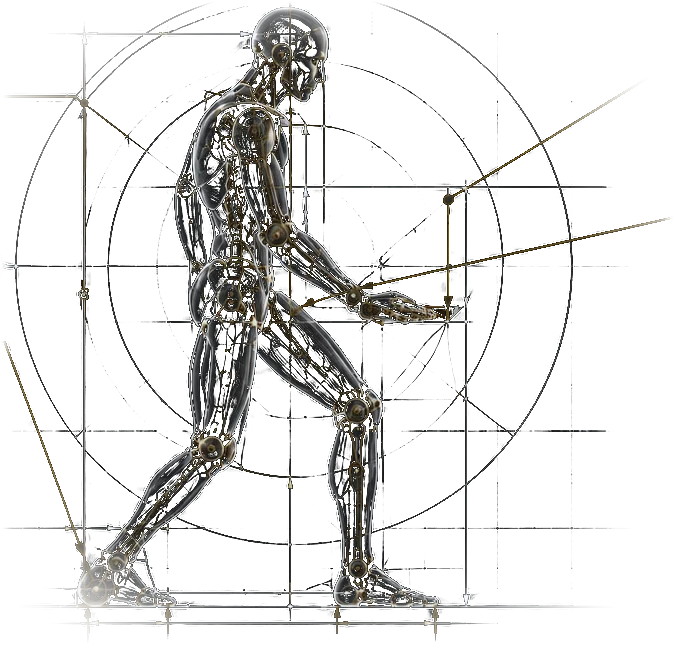
A grip starts at the fingertips and ends at the floor. The load travels through the wrist, the shoulder and the trunk, and the feet push back. We record the chain as one system, so a humanoid learns how the parts work together.
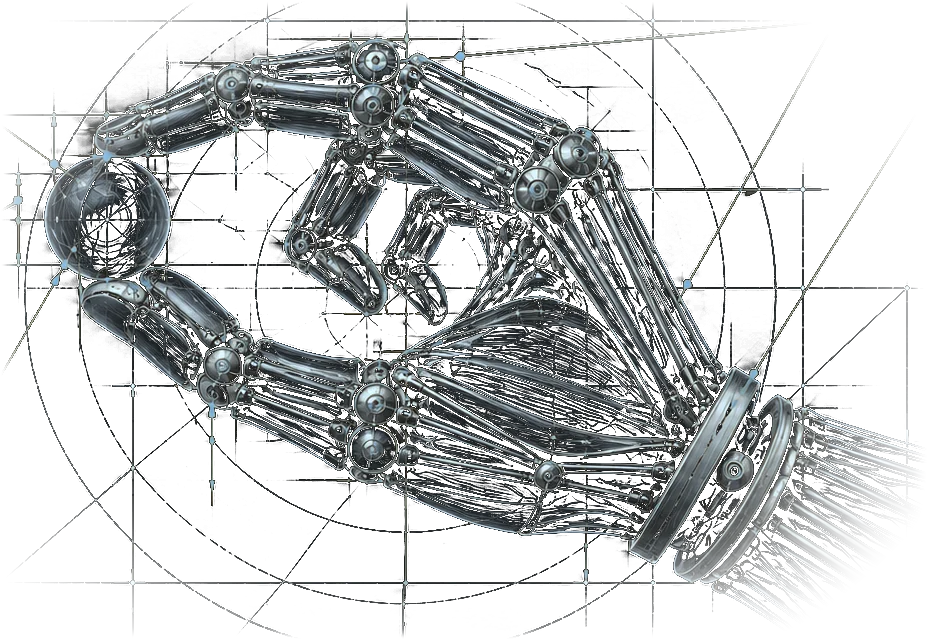
01FingertipsPressure, shear and the moment of slip.
02Arm and wristThe load travels up the arm.
03ShoulderReach, lift and stability.
04CoreThe centre of mass, held over the feet.
05HipsWeight shifts to carry the load.
06KneesAbsorb, adjust and drive.
07FeetGround reaction: the floor pushing back.
Joint 01 / 07Same clock, every joint
Fingertipt 00.000 s
Floort 00.000 s
Force view
Trunk and pelvisThe weight shifts to carry the load.
Load in the handsForce at each contact, with the object's mass.
BalanceCentre of mass kept over the feet.
Ground reactionThe feet push back against the floor.
FingertipsArm and wristShoulderCoreHipsKneesFeet
01The person
Natural movement: reaching, lifting, carrying, recovering from a stumble.
02The channels
Full-body motionEvery joint, fingertip to floor.
Muscle activationThe effort in the fibres behind each move.
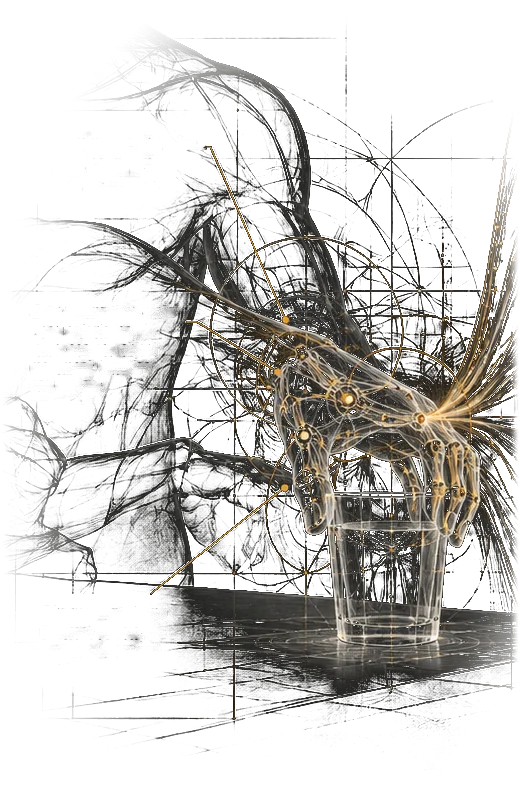
Fingertip pressureHow hard each finger presses.
Shear and slipWhen an object starts to slide.
BalanceHow the body shifts its weight.
Ground reactionHow the feet push on the floor.
Object stateMass, shape and position.
03The episode
Synchronised, calibrated and labelled, with usage rights attached.
04The humanoid
Joint-mapped data, ready to import and test on the robot.
Plate V · Our prediction
By 2040, humanoids will move like us. Indistinguishable, apart from the mandatory regulatory tag.
2026
Today
Hard shells and motors. Robots walk, but stiffly. Push one and it overcompensates.
Around 2033
Synthetic muscle and tendon. Bodies that feel touch and place force at the right moment.
2040
Movement indistinguishable from ours. We capture more of the human than robots can use today, so the data is waiting when the bodies arrive.
We make training data for humanoid robots. We record the full kinetic chain of human movement, fingertip to floor, including the muscle activation and forces behind each motion, and package it so robot-learning teams can train on it.
What exactly do you record?
The full kinetic chain of human movement, from the fingertips to the floor. That covers how people move, how they handle objects and loads, and how they recover from a stumble or a fall.
We go beneath the movement itself. Alongside every motion we record:
Joint motion across the whole body: hands, arms, shoulders, trunk, hips, legs and feet
Muscle activation: the effort in the muscle fibres that drives each movement
Contact forces: fingertip pressure, shear and the moment of slip
Balance and ground reaction: how the body shifts its weight and how the feet push against the floor
Object mass, shape and position, whenever something is being handled
Because it all comes from the same natural movement, on one clock, we capture how the parts work together: grip tightening as a load shifts, the trunk bracing to balance a reach, the feet pushing back against the floor. We turn that into data a humanoid can learn from, with every channel mapped to the matching joint.
Do you build robots?
No. We don't build robots, and we don't sell hardware. We only make data, which keeps us a neutral partner to every humanoid programme. The teams we work with never have to wonder whether we're building a rival robot.
Who is the data for?
Teams teaching humanoids to handle objects and move under load: manipulation and whole-body control teams at humanoid makers, teams building general-purpose robot brains, and builders of dexterous hands.
Can you record a specific task for us?
Yes. Tell us the task, the objects and what keeps failing, and we'll scope a capture around it. Start with the contact form.
How do consent and usage rights work?
Everyone we record gives informed consent, and every episode carries its usage terms. You always know what you're allowed to do with the data, and so do the people in it.
Where are you based?
Copenhagen, Denmark. We're European owned and governed, and bound by EU law. We work with humanoid teams anywhere in the world.
What does "Hyletic" mean?
It comes from the Greek hylē, matter. In phenomenology, hyletic data are the raw sensations beneath what we perceive. We record the forces beneath the movement.
Get involved
Teaching a humanoid to handle the real world? Let's talk.
Robot-learning team, investor, researcher or simply curious? Reach out. We're happy to walk you through what we record and how it could fit your work.
Thanks. Message received.
We'll get back to you about what we record and how it could fit your robot. Speak soon, the Hyletic team.
Preview build: this form is not connected to an inbox yet.
Thanks. Message received.
We'll get back to you shortly. Speak soon, the Hyletic team.
Preview build: this form is not connected to an inbox yet.